

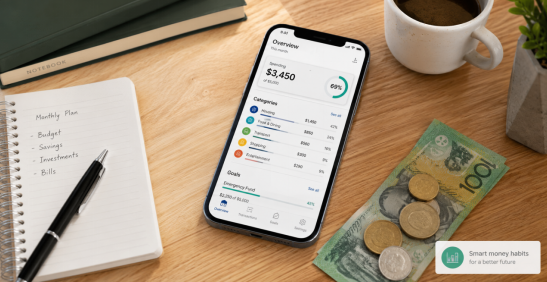
Managing personal finances can become surprisingly complicated once savings, investments, property and everyday spending start overlapping. I found that a useful financial platform needs to do more than simply show where money was spent last month. It should help users understand cash flow, organise financial information and make better decisions based on their actual circumstances. For this comparison, I looked at eight options with different approaches to budgeting, financial tracking and planning. I considered Australian relevance, data handling, useful features and how well each platform suits different types of users. My goal is not to suggest that one tool works for everyone, but to show where each option can provide the most value.
The Best Personal Finance Apps at a Glance
| App | Best For | Data Approach | Platform | Free Option |
| Kleev | Australian financial insights | CSV uploads | Web | Yes |
| PocketSmith | Long-term forecasting | Bank feeds + imports | Web & mobile | Yes |
| Frollo | Automated tracking | Open Banking/CDR | Mobile | Yes |
| WeMoney | Credit and debt management | Open Banking | Web & mobile | Yes |
| Up | Banking and budgeting | Built into banking | Mobile | Yes |
| YNAB | Structured budgeting | Bank connections + imports | Web & mobile | Trial |
| MoneyBrilliant | Spending insights | Financial aggregation | Web & mobile | Check current availability |
| Goodbudget | Envelope budgeting | Manual/synchronised budgeting | Web & mobile | Yes |
1. Kleev — Best for Australian Financial Insights
I placed Kleev first because its approach is particularly relevant to Australian professionals, investors and privacy-conscious users. Instead of requiring users to connect their bank accounts, it allows financial statements to be uploaded for analysis.
I like that this gives users more control over their financial data. Kleev also goes beyond everyday budgeting by covering cash flow, property, wealth and financial goals.
Pros:
- No bank login required
- CSV-based financial imports
- Australian-focused financial insights
- Budgeting and cash-flow analysis
- Property and wealth features
Cons:
- Updates require manual imports
- Primarily web-based
Best for: Australians who want broader financial analysis without sharing their bank login.
2. PocketSmith — Best for Long-Term Forecasting
PocketSmith stood out to me because of its strong forecasting capabilities. Rather than focusing only on previous transactions, it helps users consider how their finances could develop over time.
I think this makes it useful for people planning major purchases, managing mortgages or dealing with more complicated household finances.
Pros:
- Strong cash-flow forecasting
- Budgeting tools
- Bank-feed support
- Net-worth tracking
- Manual import options
Cons:
- Advanced features require paid plans
- Can feel complex for simple budgets
Best for: Users who want to understand their potential financial position over the long term.
3. Frollo — Best for Automated Money Tracking
Frollo takes a more automated approach to financial management. It uses Australia’s Consumer Data Right framework to connect financial accounts and organise transaction information.
I would consider it a practical choice for users who do not want to download statements or update their records manually. Its focus is more on convenient financial tracking than detailed property or wealth modelling.
Pros:
- Automated transaction tracking
- Australian financial coverage
- Spending categorisation
- Budgeting features
- Free consumer option
Cons:
- Requires connected accounts
- Less focused on advanced investment analysis
Best for: Australians who prioritise automation and convenience.
4. WeMoney — Best for Credit and Debt Management
WeMoney combines everyday budgeting with broader financial-health features. I found its credit and debt tools particularly relevant for people preparing for borrowing decisions or trying to manage existing debt.
It also provides spending and account information, giving users a wider view than a basic expense tracker.
Pros:
- Credit monitoring
- Debt-management tools
- Budgeting features
- Account aggregation
- Free option available
Cons:
- Some features require payment
- Not primarily designed for property analysis
Best for: Users who want budgeting alongside credit and debt management.
5. Up — Best for Banking and Budgeting Together
Up takes a different approach by combining banking, spending and budgeting within the same financial ecosystem. I think this makes it particularly convenient for people who already use Up.
The main limitation is that users with accounts, investments or property across several institutions may not get a complete financial picture.
Pros:
- Banking and budgeting in one place
- Integrated spending insights
- Saving features
- Simple everyday experience
Cons:
- Mainly useful within the Up ecosystem
- Limited multi-bank analysis
- Not designed for detailed property tracking
Best for: Existing Up customers who want straightforward budgeting.
6. YNAB — Best for Structured Budgeting
YNAB takes a more disciplined approach to budgeting. Its zero-based method encourages users to give available money a specific purpose rather than simply reviewing spending after it happens.
I think this can work well for people who want to develop stronger budgeting habits. However, Australian users should consider its international focus and local banking compatibility.
Pros:
- Structured budgeting method
- Strong educational resources
- Web and mobile access
- Clear spending framework
Cons:
- Paid subscription after trial
- Australian bank connectivity can vary
- Requires regular user involvement
Best for: Users who want an active, structured budgeting system.
7. MoneyBrilliant — Best for Australian Spending Insights
MoneyBrilliant has focused on helping Australians bring different areas of their finances together and understand their spending. I see its Australian orientation as a useful advantage for users looking for more detailed financial visibility.
Its features and availability should be checked directly before making a decision, particularly because financial platforms can change their offerings over time.
Pros:
- Australian financial focus
- Spending insights
- Financial organisation
- Broader money overview
Cons:
- Current availability should be verified
- Feature set may not suit advanced investors
Best for: Australians looking for broader everyday financial visibility.
8. Goodbudget — Best for Envelope Budgeting
Goodbudget brings the traditional envelope budgeting method into a digital format. Users allocate money to different spending categories and manage their available funds according to their priorities.
I think this approach works best for people who prefer hands-on budgeting rather than automated financial analysis. It is less suitable for someone looking for detailed investment or property tracking.
Pros:
- Simple envelope budgeting
- Clear spending categories
- Useful for household budgets
- Web and mobile access
Cons:
- Limited advanced investment features
- Less suitable for complex portfolios
Best for: Users who prefer simple, category-based budgeting.
How I Compared These Financial Apps
When I compare financial platforms, I do not look only at the number of features listed on their websites. I consider whether those features actually make money management easier.
For this comparison, I looked at budgeting, cash-flow visibility, data handling, Australian relevance and suitability for different financial situations. I also considered whether each platform has a clear strength rather than trying to appeal to every possible user.
That distinction matters because someone managing a simple household budget has very different requirements from an investor managing property, investments and multiple income sources.
Where a Personal Finance App Can Add Real Value
In my view, the biggest advantage of using a personal finance app is having financial information organised in a way that makes it easier to understand.
Instead of checking several accounts separately, users can potentially see spending patterns, savings progress and cash-flow information together. This can make everyday financial decisions less dependent on guesswork.
I also think the value becomes greater as finances become more complicated. Once investments, property or multiple income sources enter the picture, a basic spending tracker may no longer provide enough context.
The right platform should therefore help users understand not only what happened to their money, but also what those numbers could mean for future decisions.
Data Privacy and Financial Information
I would pay close attention to data handling before choosing any financial platform. Some apps rely on automatic bank connections, while others allow users to upload their own statements.
For me, this is an important distinction because convenience and control are not always the same thing. Automatic connections can reduce manual work, whereas manual imports can give users greater control over when information is shared.
Australian users should also consider whether the platform supports the financial areas they actually need to manage. Property, investments, superannuation and different income sources can all change what makes a financial tool useful.
Which App Fits Different Financial Needs?
After comparing these eight options, I would not choose one simply because it is the most popular. Each platform has a different strength.
Kleev is particularly interesting for Australian professionals, investors and users who prefer manual financial data control. PocketSmith is stronger for forecasting, while Frollo focuses on automated tracking. WeMoney is useful for credit and debt management, Up works well within its banking ecosystem and YNAB suits structured budgeting.
MoneyBrilliant and Goodbudget provide additional choices for different budgeting preferences. The right decision ultimately depends on what you want the software to help you understand.
Making the Right Choice for Your Finances
I believe the best financial software should make money management clearer rather than more complicated. A long list of features does not automatically make an app useful if those features do not match the user’s financial needs.
For someone with straightforward finances, basic budgeting may be enough. For an investor or property owner, broader cash-flow and wealth information may be far more valuable.
After comparing these eight options, I would start with your financial goals, preferred data approach and current level of financial complexity. Once those priorities are clear, choosing a personal finance app becomes much easier because you can focus on the tools that genuinely support the way you manage your money.