

CoreWeave is one of the most talked-about names in the AI boom, and lately it has been talked about for the wrong reasons. After soaring following its stock market debut in 2025, the company’s shares have fallen hard, and its bonds have been trading at yields that signal real worry about its debt.
So what exactly is CoreWeave, why did its share price fall, and what should investors watch next? Here is the plain-English version.
Quick Answer: What Is CoreWeave?
CoreWeave is a US cloud company that rents out powerful Nvidia graphics processors (GPUs) to businesses building and running artificial intelligence models. Its biggest customers include Microsoft, Meta, OpenAI and Anthropic. It listed on the Nasdaq in March 2025 under the ticker CRWV, and Nvidia is one of its major shareholders. You can read more on the company’s official site, CoreWeave.
From Crypto Miner to AI Cloud Provider
CoreWeave did not start out as an AI company. It was founded in 2017 as a cryptocurrency mining business, running Nvidia GPUs to mine Ethereum. When the crypto market crashed in 2018, the founders repurposed those GPUs for other computing work, and the company launched its cloud platform in 2020.
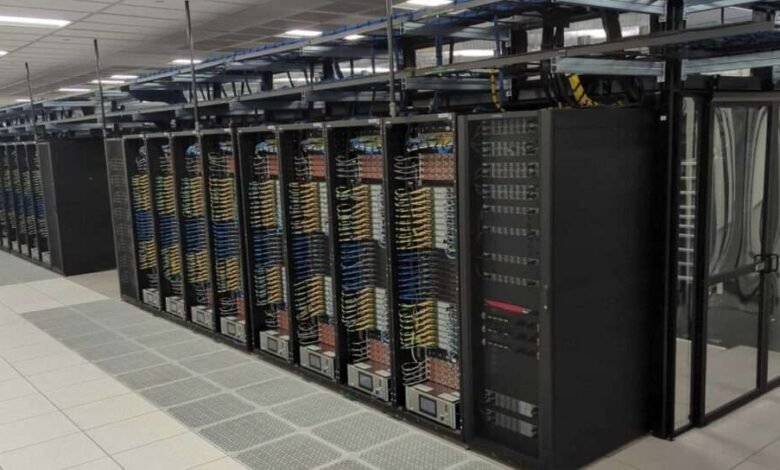
That pivot turned out to be well timed. As demand for AI computing exploded, CoreWeave’s fleet of GPUs became extremely valuable. Today it operates dozens of data centres running well over a quarter of a million Nvidia GPUs, and it rents that computing power to companies training and running AI models.
The business model is simple to describe: buy expensive GPU hardware, install it in leased data centres, and sell the computing capacity under multi-year contracts. Most of its revenue comes from committed contracts rather than one-off sales, which is why investors pay close attention to its contracted backlog.
CoreWeave’s Share Price: The Rise
CoreWeave listed on the Nasdaq on 28 March 2025 at US$40 per share, raising about US$1.5 billion. The stock then surged as the AI boom gathered pace, reaching a record high of about US$183.58 in June 2025.
The growth numbers behind that rise were striking. Revenue jumped 168% in 2025 to about US$5.1 billion, and adjusted earnings before interest, tax, depreciation and amortisation rose to roughly US$3.1 billion. In April 2026, the company expanded its deal with Meta to around US$21 billion of AI computing capacity running through to December 2032.
By mid-2026, CoreWeave reported remaining performance obligations — contracted work not yet delivered — of more than US$100 billion, with about 41% of that expected to be recognised as revenue over the following two years.
Why CoreWeave Shares Fell
The fall has been driven by four connected worries:
1. A very heavy debt load
Building AI data centres costs an enormous amount of money, and CoreWeave has borrowed heavily to do it. Reports put its total debt and lease obligations at roughly US$50 billion, and its 2030 bonds at one point yielded close to 16% — a level the market associates with distressed borrowers. The company also expects to spend between US$35 billion and US$39 billion on capital expenditure this year, which means more cash going out the door before it comes back in.
2. Customer concentration
Microsoft alone accounted for about 67% of CoreWeave’s revenue in 2025. That makes the company highly exposed to one customer’s spending decisions. When Microsoft reported quarterly capital spending below expectations in late October 2026 and mentioned delays in some third-party capacity deliveries, CoreWeave’s shares dropped sharply the next morning before recovering some ground.
3. Insider selling
Regulatory filings show CoreWeave’s three co-founders have sold billions of dollars of stock since the IPO, including roughly US$1 billion sold by chief executive Michael Intrator and entities linked to him, mostly under prearranged trading plans. Prearranged sales are legal and common, but heavy selling from the top still rattles investors.
4. AI bubble fears
More broadly, investors have started asking whether the AI infrastructure build-out is being financed on assumptions that are too optimistic. Because CoreWeave borrows to buy chips and data centre capacity that will only earn money over future years, it sits right in the middle of that debate — and it has become an easy target whenever sentiment towards AI stocks turns sour.
Where the Share Price Stands Now
After the October sell-off, CoreWeave shares fell to a new 52-week low of around US$51 to US$54 in the week of 20 October 2026, before recovering to around US$64 by 29 October 2026. That still leaves the stock down more than half from its June 2025 peak, and down roughly 50% over the past year.
Analyst opinion is split. Goldman Sachs upgraded the stock to Buy on 19 October 2026 after the rout, while other firms, including HSBC, have warned about debt and AI demand risks. Among analysts tracked by market data providers, buys still outnumber holds and sells, but price targets have been cut sharply from earlier highs.
The next big test is CoreWeave’s third-quarter results, expected around 9–10 November 2026. Investors will be watching revenue growth, cash burn, debt levels, and any update on customer contracts and data centre deliveries.
Can You Buy CoreWeave Shares?
CoreWeave trades on the Nasdaq under the ticker CRWV, so it is available through brokers that offer access to US shares, including most major online brokers. Because it is a US-listed stock, prices are quoted in US dollars, and currency movements will affect returns for investors buying in other currencies.
It is worth remembering that this is a high-volatility, loss-making growth stock with a large debt pile. It is not a steady dividend payer or a defensive investment, and its share price can move sharply on a single earnings report or a single customer’s spending update.
The Bottom Line
CoreWeave went from crypto miner to one of the AI boom’s flagship companies in just a few years, and its contracted backlog shows real demand for what it sells. But the same strategy that fuelled its rise — borrowing big to build AI capacity fast — is now the main source of worry. Whether the stock recovers depends on whether it can turn that huge backlog into cash faster than its debts come due.
This article explains what CoreWeave is and why its share price moved. It is general information only, not financial advice.