
BYD has apologised after some of its new electric SUVs left the factory with the front and rear wheels fitted the wrong way round. The mix-up was caused by a coding error at a wheel supplier, and the company is offering free inspections and replacement rims to affected owners. Here is what happened, which cars are involved, and what it means for drivers in Australia.
Quick answer
- What happened: Some 2026 BYD Da Tang electric SUVs were built with their front and rear wheel rims swapped — wider rear rims on the front axle, narrower front rims on the rear.
- When: BYD issued a public apology on Wednesday, 11 November 2026, after owners raised the problem.
- Cause: A coding error at wheel-rim supplier Hubei Boyu Industrial.
- What owners get: A free inspection, free rim replacement, a loan car or transport costs while the work is done, and a restarted full-vehicle warranty.
- In Australia: The Da Tang is not sold here, so this fault does not affect cars bought from BYD in Australia. Australian BYD owners should still know about the separate Shark 6 spare-wheel recall (see below).
What went wrong with the wheels
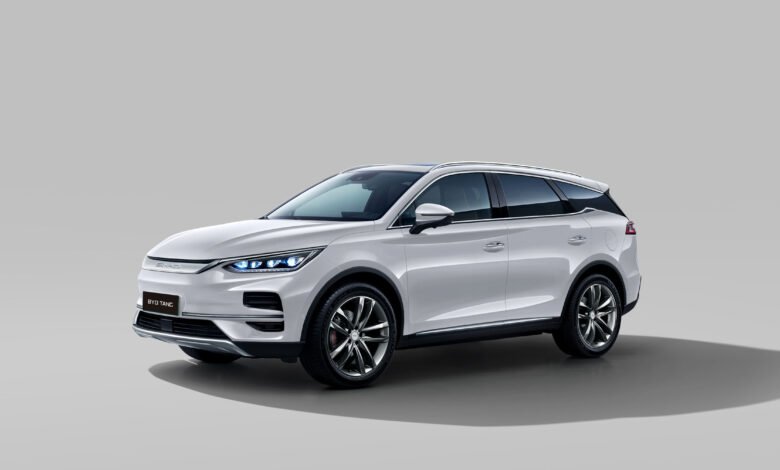
The problem affects the 2026 Da Tang EV, BYD’s large flagship electric SUV, mainly the rear-wheel-drive version with a 950-kilometre range. The car uses different-sized wheels front and rear: 8J rims with 255/50R20 tyres at the front, and wider 9J rims with 275/45R20 tyres at the rear. The wider rear tyres help with grip, because the rear wheels do the driving on this version.
On the affected cars, the two were reversed. The front wheels ended up with the wider 9J rims and 255 tyres, while the rear wheels got the narrower 8J rims with 275 tyres. Owners first noticed something was off and raised complaints, with some discovering the swap during inspections at service centres. One owner reported a rear tyre blowout in September, and the dealer confirmed the next day that the rims were the wrong way round.
BYD traced the fault to incorrect coding at Hubei Boyu Industrial, the supplier that assembles its wheel and tyre units. The company says it has corrected the coding and the supplier has added visual checks to its production line to stop it happening again.
How to check if your car is affected
BYD has not said how many cars are affected or which production batches are involved, so there is no list of registration numbers to check against. If you own a 2026 Da Tang EV, the simplest check is to look at the wheels themselves:
- Front wheels should have 8J rims and 255/50R20 tyres.
- Rear wheels should have 9J rims and 275/45R20 tyres.
The rim width (8J or 9J) is stamped on the rim itself, and the tyre size is printed on the tyre sidewall. If the numbers are the other way round, the rims are swapped. If you are unsure, BYD is offering a free inspection at a service centre, so it is worth booking one in rather than guessing.
Is it safe to drive?
BYD says its own testing found that the wrongly fitted rims do not affect handling and pose no safety risk. That is the company’s position, and it has not published details of the tests.
Some independent motoring experts are less relaxed about it. CarNewsChina, which first reported the fault on 8 November, said the wrong fitment could significantly affect handling, cause instability in corners and at high speed, and upset stability systems that were never set up for it. There is also a technical wrinkle: the wider 275 rear tyre sits on a narrower 8J rim, below the minimum rim width the tyre was designed for.
The honest answer is that the two sides disagree, and the safe move for any owner is simple: get the free inspection and have the rims swapped back. It costs nothing and removes the question entirely.
What BYD is offering affected owners
BYD’s apology, posted on its official Weibo account on 11 November, comes with a clear offer for owners of affected cars:
- Free inspection at a service centre.
- Free replacement of the wheel rims.
- A temporary replacement car, or compensation for transport costs, while the work is done.
- A full restart of the vehicle’s warranty, back to zero from 11 November 2026.
China’s market regulator has not published a formal mandatory recall for the Da Tang as of 11 November, so for now this is a company-run fix rather than a government-ordered recall. That may change if the regulator decides to step in — Shenzhen authorities have opened an investigation, according to local reports.
What this means in Australia
The Da Tang is a China-market model and BYD does not sell it in Australia — the Tang was once promised for this market and has since been ruled out. So if you bought your BYD here, this particular wheel fault does not apply to your car.
It still matters for Australian drivers, because BYD has become one of the biggest-selling car brands in the country, and this is not the brand’s first wheel-related problem here. In September 2026, BYD recalled 32,009 Shark 6 utes in Australia after a fault with the spare-wheel tray that could let the spare wheel fall off while driving. That recall (REC-006728 on the official Vehicle Recalls Australia site) covers Shark 6 models built between 29 August 2024 and 15 June 2026. The fix — replacing the spare-wheel lifter assembly — is free and takes about 30 minutes, and owners were told to remove the spare wheel until the repair is done. If you own a Shark 6 from those years and have not had it checked, you can look the recall up by its number on the Vehicle Recalls Australia website or ask your dealer to run a VIN check.
There was also a separate recall in China last month, covering 183,211 vehicles including older Tang models built between 2014 and 2022, over a brake-pedal defect. That one does not affect cars sold in Australia.
Frequently asked questions
Is my BYD affected by the wheel mix-up?
Only if you own a 2026 Da Tang EV, which is sold in China and not in Australia. Cars bought from BYD in Australia — the Atto 3, Dolphin, Seal, Sealion range and Shark 6 — are not part of this fault.
How many cars have the wrong wheels?
BYD has not said. It has not disclosed a number of affected vehicles or the production batches involved.
Is there a formal recall for the Da Tang?
Not yet. As of 11 November 2026, China’s market regulator had not published a mandatory recall for the Da Tang. BYD is handling it directly with free inspections and replacements.
What should Australian BYD owners do?
Nothing about the Da Tang fault — it does not apply here. But if you own a Shark 6 built between August 2024 and June 2026, check whether the spare-wheel recall (REC-006728) applies to your car and get the free fix if it does.
The bottom line
A supplier coding error put the wrong wheels on some of BYD’s flagship Da Tang SUVs, and the company has apologised and offered free fixes, loan cars and a restarted warranty. BYD insists the cars are safe to drive, while some independent experts urge caution — either way, the free inspection settles it. For Australian owners, the car in question is not sold here, but the separate Shark 6 spare-wheel recall is one worth checking today.