

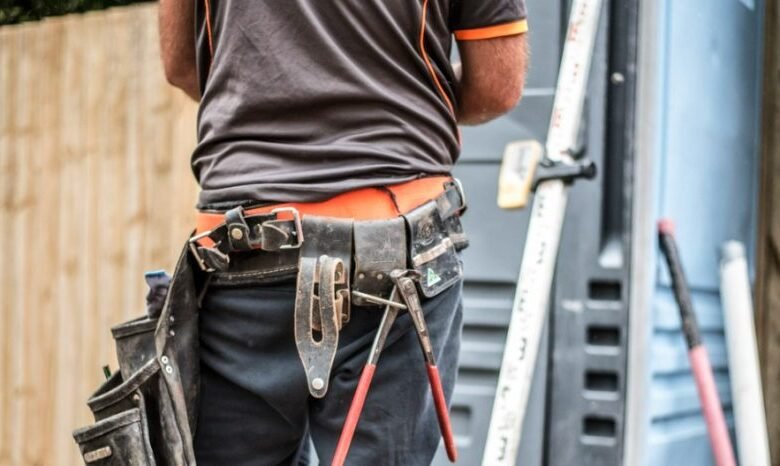
Every tradie spends money to do their job — tools, fuel, boots, tickets, phone calls. A lot of that spending is tax deductible, but only if you claim it the way the ATO expects. The rules are simple, and they are the same for every work expense: you must have paid for it yourself and not been reimbursed, it must directly relate to earning your income, and you must have a record to prove it. Miss one of those three, and the claim falls over.
Quick answer: The biggest tradie deductions are usually tools, vehicle costs and protective gear. For 2025–26 the ATO lets you claim 88 cents per work kilometre (up to 5,000 km), tools costing $300 or less in full, and home office time at 70 cents an hour. From 2026–27 there is also a new $1,000 standard deduction for work expenses with no receipts — but most tradies who itemise will still come out ahead. The figures below come from the ATO’s guide for building and construction employees.
The 12 best tax deductions for tradies
1. Tools and equipment
Best for: every tradie who buys their own gear.
Chisels, angle grinders, drills, saws — if you bought it to do your job and your employer didn’t pay for it, you can claim it. Tools and equipment costing $300 or less can be claimed in full in the year you buy them. Anything dearer is claimed over its effective life, what the ATO calls decline in value. You can also claim repairs to tools you already own. If you also use a tool at home, only claim the work-related share.
2. Work vehicle costs — the cents per kilometre method
Best for: tradies who drive between sites.
For 2025–26 the ATO rate is 88 cents per work kilometre, up to 5,000 kilometres per car per year — a maximum deduction of $4,400. The rate covers everything: fuel, registration, insurance, servicing and wear and tear, so you can’t claim those costs again on top. For 2026–27 the rate rises to 91 cents a kilometre. You don’t need receipts for this method, but you do need to be able to show how you worked out your kilometres — a diary or a reasonable record will do. For example, 4,000 work kilometres at 88 cents is a $3,520 deduction.
3. The logbook method
Best for: tradies who drive a lot for work.
If you drive more than 5,000 work kilometres a year, the logbook method usually pays more. You keep a logbook for a continuous 12-week period that shows your normal driving pattern, and that percentage is valid for five years. You then claim that percentage of all your actual car costs — fuel, rego, insurance, servicing, interest on the loan and depreciation. A tradie in a ute doing serious kilometres will often get far more from the logbook than the $4,400 cents-per-kilometre cap.
4. Protective clothing and safety gear
Best for: anyone who works on site.
Steel-capped boots, hi-vis vests, hard hats, safety glasses, gloves and fire-resistant clothing are all deductible, as long as they genuinely protect you from a real risk at work. If you work outdoors for long stretches, sun protection counts too — sunscreen, hats and sunglasses. What doesn’t count is ordinary clothing. Plain jeans, t-shirts and runners are not deductible, even if you only wear them to work and they get wrecked on site.
5. Laundry for your work clothes
Best for: tradies who wash their own gear.
You can claim the cost of washing, repairing and dry-cleaning your deductible work clothes. The ATO accepts $1 per load when you wash work clothes on their own, or 50 cents a load when they go in with your other washing. It is a small claim, but over a year of site work it adds up — and it is one tradies often forget.
6. Licences, tickets and renewals
Best for: keeping your tickets current.
The cost of renewing a licence, permit, card or ticket you need to keep doing your current job is deductible. That covers your white card, EWP and working-at-heights tickets, trade licence renewals and the training courses you need to keep them.
7. Union and association fees
Best for: union members.
Union fees are fully deductible, along with fees for a professional association connected to your trade. If the fees come out of your pay, check your income statement — they are often already recorded there.
8. Your phone and internet
Best for: tradies who take calls and send quotes on their own phone.
You can claim the work-related share of your own phone, data and internet. The ATO expects you to work out the share with a four-week diary that records your work calls and data use against your private use. You can’t claim the full bill if you also use the phone for personal calls — only the work part counts.
9. Home office costs
Best for: tradies who do quotes and admin from home.
If you handle invoicing, quoting or paperwork from home, you can claim home office costs. The ATO’s fixed-rate method pays 70 cents for every hour you work from home in 2025–26, and it covers electricity, internet, phone and stationery. You just need a record of your hours. Or you can claim your actual costs with full records, which may pay more if your setup is expensive. You can’t claim both.
10. Self-education and training
Best for: tradies upskilling in their current trade.
Courses that relate directly to your current job are deductible — a new ticket, a refresher, or training your employer requires. First aid training counts too if you are the designated first aid person at work. A course for a different career, or a job you hope to get one day, is not.
11. Overtime meals
Best for: tradies working overtime.
You can claim a meal you buy and eat while working overtime, but only if you receive an overtime meal allowance under an industrial law, award or agreement — and you must include that allowance as income in your return. No allowance, no claim. It is one of the most misunderstood deductions tradies try to claim.
12. The $20,000 instant asset write-off
Best for: tradies running their own business.
If you run your own trade business with an aggregated turnover under $10 million, the $20,000 instant asset write-off lets you claim eligible assets costing less than $20,000 in full in the year you buy them. From 1 July 2026 the write-off became permanent for eligible assets first used or installed from that date. It is a business deduction, not an employee one — it belongs in your business return, not your personal one.
What tradies can’t claim
A few claims get knocked back every year, so it is worth knowing where the line is:
- The drive from home to your one regular worksite. The ordinary commute is private, even if it is long. The exception is travel between two separate worksites in the same day, or carrying bulky tools when there is nowhere secure to store them at the site.
- Plain clothes. Jeans, t-shirts and runners are not deductible, no matter how much wear they get on site.
- Your driver’s licence. The cost of getting or renewing an ordinary driver’s licence is a private cost.
- Anything your employer paid for. If your boss supplied the tools or reimbursed you, you can’t claim them.
- Meals on a normal workday. Lunch on site is a private cost. Only overtime meals with an allowance count.
New for 2026–27: the $1,000 standard deduction
From 1 July 2026, employees can claim a standard deduction of up to $1,000 for work-related expenses without receipts. It is capped at your labour income, and it is reduced dollar for dollar by any work expenses you itemise — so if your real expenses are more than $1,000, itemising still wins. For most tradies it will: typical work-expense claims for building and construction workers run well above $1,000 a year. The old $300 no-receipts allowance and the $150 laundry allowance ended on 30 June 2026, so from 2026–27 you need written evidence for every expense you itemise.
How to keep records without the headache
Photograph every receipt the day you get it — the ATO’s free myDeductions app is built for exactly that. Keep your logbook, your four-week phone diary and your home-office hours in one place. For 2025–26, if your total work-related expenses are $300 or less, you don’t need receipts — but you still need to show how you worked out each claim. And if your claim is large, your records are what stand between you and an ATO letter.
This article is general information based on the ATO’s guidance for building and construction employees, not personal tax advice. Tax rules change every year, so check ato.gov.au or talk to a registered tax agent before you lodge.