

Afterpay and Zip Pay are the two biggest buy now, pay later services in the country, and they work in quite different ways. Afterpay splits each purchase into four equal payments over six weeks. Zip Pay gives you a spending limit of up to $1,000 that you repay on a schedule you choose. Both are interest-free, but the fees you pay when things go wrong are very different.
Quick verdict: Afterpay is better if you want each purchase cleared quickly on a fixed schedule and pay no account fee. Zip Pay is better if you want flexibility — a reusable limit you can repay weekly, fortnightly or monthly, and a card you can use anywhere Visa is accepted. If you carry a balance from month to month, Zip Pay’s $9.95 monthly fee makes Afterpay the cheaper option.
How Afterpay Works
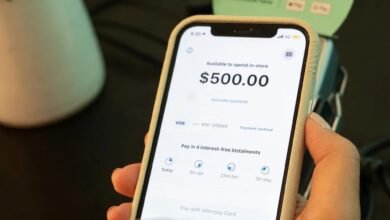
Afterpay’s main product is Pay in 4. You pay about 25% of the purchase price upfront, then the remaining three payments come out automatically every two weeks, so the whole purchase is paid off in six weeks. There is no interest and no account fee — Afterpay is free when you pay on time.
Your starting limit is modest and rises or falls based on your repayment history. Afterpay also offers Afterpay Plus, a $9.99-a-month subscription that lets you use Afterpay almost anywhere, including places that don’t offer it at checkout.
How Zip Pay Works
Zip Pay is a reusable line of credit with a limit between $350 and $1,000. You apply once, get a digital Zip Visa card, and can shop online or in store anywhere Visa is accepted — not just at stores that offer Zip at checkout. You can also use it to pay bills through BPAY and buy gift cards.
Repayments are flexible: you choose your own amount, date and frequency — weekly, fortnightly or monthly — as long as you meet the minimum monthly repayment (from $10 a week). Or you can pick Zip’s fee-waiver schedule, which automatically adjusts your repayments to clear the full balance each month so you avoid the monthly fee.
Afterpay vs Zip Pay: Side-by-Side Comparison
| Feature | Afterpay (Pay in 4) | Zip Pay |
|---|---|---|
| How you repay | 4 equal payments over 6 weeks, 25% upfront | Flexible weekly, fortnightly or monthly repayments |
| Interest | None | None |
| Account or monthly fee | None (Afterpay Plus is $9.99/month, optional) | $9.95 a month, waived if you pay your closing balance in full by the due date |
| Late fee | Orders $40 or more: $10 when a payment is missed, plus $7 if still unpaid after 7 days; capped at the lower of 25% of the order or $68 per order | $7.50 if you miss the minimum repayment, charged 7 days after your due date |
| Credit limit | Starts low, rises with good repayment history | $350 to $1,000 |
| Where you can shop | At stores that offer Afterpay at checkout (or almost anywhere with Afterpay Plus) | Anywhere Visa is accepted, online and in store |
| Minimum repayment | Set by the 4-payment schedule | From $10 a week |
| Credit check | Yes, since June 2025; does not currently report repayment history to credit bureaus | Yes, since June 2025; missed payments or defaults may be listed on your credit file |
Fees current as of October 2026, taken from each provider’s own published fee pages. Fees can change, so check the provider’s site before you sign up.
What a $400 Purchase Really Costs
Say you buy $400 worth of goods and pay everything on time. With Afterpay you pay 4 instalments of $100 over six weeks and it costs you nothing extra. With Zip Pay you choose your own pace — for example, $50 a fortnight — and as long as you clear your closing balance by the due date each month, it also costs you nothing extra.
Now say life gets in the way and you miss a payment. On Afterpay, a missed payment on a $400 order attracts a $10 late fee, plus $7 more if it is still unpaid after seven days — $17 in total for that missed payment, with total late fees on the order capped at $68. On Zip Pay, missing the minimum repayment attracts a $7.50 late fee, and if a balance is still outstanding at the end of the month, the $9.95 monthly account fee applies too. Pay only the minimum on Zip Pay month after month and the $9.95 fee keeps adding to the cost of what you bought.
Credit Checks and Your Credit Score
Since 10 June 2025, buy now, pay later providers must hold an Australian credit licence and check that you can afford what you borrow before approving you. That means applying for either service can leave an enquiry on your credit file.
The difference is what happens after that. Afterpay does not currently report your repayment history to credit reporting bodies. Zip may list missed payments or defaults on your credit file, which can affect future credit applications. If you are planning a home loan application soon, that is worth knowing.
Who Each Option Suits
Afterpay suits you if: you want a purchase paid off fast on a set schedule, you never want to pay an account fee, and you like the discipline of a fixed six-week deadline. It is the simpler, more predictable option.
Zip Pay suits you if: your income is uneven and you want to choose your own repayment pace, you want one reusable limit instead of a new plan for every purchase, or you want to shop anywhere Visa is accepted rather than only at stores that offer a pay-later button at checkout. Just commit to clearing the balance each month, or the $9.95 fee eats into the benefit.
Which Is Better?
For most shoppers, Afterpay wins on cost: no monthly fee, a hard cap on late fees, and a schedule that clears each purchase in six weeks so debt does not linger. Zip Pay wins on flexibility: a reusable limit, your choice of repayment pace, and a Visa card that works almost everywhere.
The deciding question is simple. Will you clear the balance every month? If yes, Zip Pay’s flexibility costs you nothing and may suit you better. If you are not sure, Afterpay is the safer pick — its fixed schedule and capped fees limit how much a missed payment can cost you.
Frequently Asked Questions
Is Afterpay or Zip Pay better for your credit score?
Both now run credit checks when you apply, so either can leave an enquiry on your file. Afterpay does not currently report your repayment history, while Zip may list missed payments or defaults, so Zip carries slightly more credit-file risk if you fall behind.
Can you use Afterpay and Zip Pay at the same time?
Yes, you can hold both accounts, but each approval adds a credit enquiry, and juggling two sets of repayments makes it easier to miss one. You also cannot use one pay-later service to repay another.
Do Afterpay and Zip Pay charge interest?
No. Neither charges interest on these products. Their costs come from fees — late fees on both, plus a monthly account fee on Zip Pay when you carry a balance.
What happens if you miss a payment?
Afterpay charges a $10 late fee (plus $7 after seven days) on orders of $40 or more, capped at the lower of 25% of the order or $68, and pauses your account until you are back on track. Zip Pay charges a $7.50 late fee seven days after a missed minimum repayment, and the $9.95 monthly fee applies in any month you carry a balance.
This article is general information only. It is not financial advice and does not take into account your objectives, financial situation or needs. Buy now, pay later is a form of credit — only borrow what you can repay on time.