

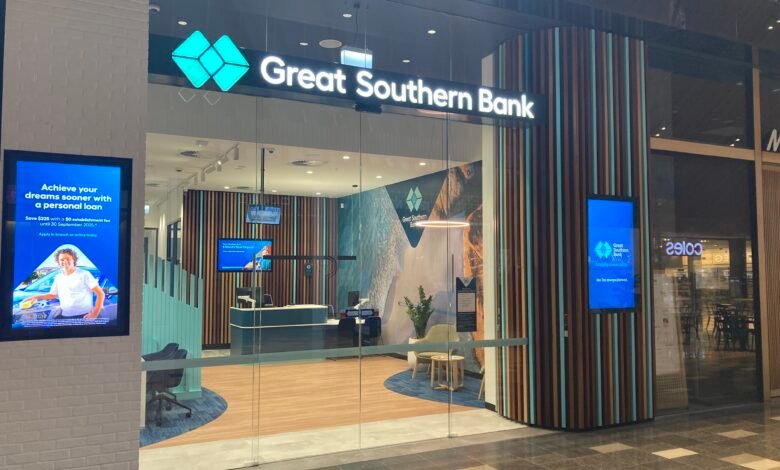
Quick answer: Great Southern Bank is one of the country’s largest customer-owned banks — owned by its customers, not shareholders — and was known as CUA (Credit Union Australia) until June 2021. It offers everyday accounts, savings, home loans, personal loans and credit cards, with branches mainly on the east coast plus online and app banking. You can log in through online banking or the mobile app, and reach them on 133 282. For current rates and products, see greatsouthernbank.com.au.
Who is Great Southern Bank?
Great Southern Bank is a mutual bank, which means it has no shareholders — its customers are its owners, and profits go back into the business rather than out as dividends. Its roots go back to 1946, and it traded as Credit Union Australia (CUA) for more than 40 years before changing its name to Great Southern Bank in June 2021. The reason given at the time was simple: research showed half the country didn’t know what a credit union was.
The bank is headquartered at 300 George Street in Brisbane, led by CEO Paul Lewis, and serves more than 400,000 customers. Its branches are spread across the country, mainly on the east coast, and its contact centre is based in Melbourne.
One thing worth knowing: Great Southern Bank has signed a memorandum of understanding to explore a merger with Western Australia’s P&N Group. If members of both banks vote for it late in 2026, the combined bank would hold around $30 billion in assets and serve some 620,000 members — making it the largest mutual bank in the country. For now, though, nothing has changed for customers.
Accounts and savings
For everyday banking there is the Everyday Account for daily transactions, with a Visa debit card you can add to Apple Pay or Google Pay through the app before the physical card even arrives.
On the savings side, the bank is known for competitive savings rates — its most popular savings products have regularly ranked among the market leaders. The mobile app includes a feature called The Vault, which lets you hide a savings account from your main view so you are less tempted to dip into it. Term deposits are also available, including options aimed at smaller businesses.
You can open accounts online, and the bank’s switching guide walks you through moving salary payments, direct debits and BPAY across from your old bank.
Home loans
Home lending is the bank’s biggest business. The main products are:
- Achieve Variable — a no-frills variable loan with limited offset, unlimited fee-free extra repayments, and no monthly or annual fees.
- Accelerate Variable — a variable loan with 100% offset for borrowers who want their savings working against their mortgage.
- Fixed rate loans — fix for one to five years, with no monthly or annual fees and the ability to make extra repayments during the fixed term. The bank also offers 100% offset on some fixed-rate loans, which is unusual.
Most loans can be split between fixed and variable portions, and interest-only repayments are available for a limited period on eligible products. The bank takes part in the federal government’s Home Guarantee Scheme, accepts deposits under 20% on many loans, and can arrange bridging loans and rural residential loans.
Rates move with the market, so treat any figure you see quoted online as a starting point and check the bank’s current rates before applying. Independent broker reviews describe the bank’s rates as competitive and note that it is less likely than the major banks to hike your rate after the loan is approved — though lending criteria are strict, and processing can slow down in busy periods.
Personal loans and credit cards
Personal loans cover cars, holidays, renovations and debt consolidation, with weekly or fortnightly repayment options. From time to time the bank waives its $225 establishment fee on personal loan applications — check whether the current offer is running before you apply.
Credit cards are also on offer, manageable through the same app and online banking as everything else.
How to log in to Great Southern Bank
Existing customers bank through online banking on the website or the Great Southern Bank mobile app. Your customer number is in the welcome email or letter you received when you opened the account.
If you are new to digital banking, the setup looks like this:
- Download the app and tap Register on the login screen (or register online, or call 133 282).
- Enter your customer number and the temporary password sent to your phone.
- Set your own password, turn on fingerprint or Face ID login, and set up security questions so you can reset your password online later.
- Activate your digital debit card in the app and add it to your phone wallet — no need to wait for the plastic.
Inside the app you can check balances, pay bills, transfer with PayID or Osko, manage cards (including locking a misplaced debit card), view loan redraw amounts, and share your BSB and account details. If you get locked out, you will need to call 133 282 to reset access.
How to contact Great Southern Bank
- Phone: 133 282 — Monday to Friday 8:00am to 7:00pm, Saturday 8:00am to 4:00pm (AEST).
- After hours: 1800 648 027.
- Reporting unauthorised transactions: 1300 705 750, 24 hours a day.
- From overseas: +61 7 3183 3502.
- Branches: use the branch finder on the bank’s website — locations are concentrated on the east coast.
- Everyday banking in person: deposits and withdrawals are available at more than 1,800 Australia Post outlets through Bank@Post, and you can use thousands of ATMs nationwide.
- Secure message: log in to online banking to send one; the bank aims to reply within two business days.
Business+ customers bank entirely digitally and can live-chat with the team Monday to Friday, 8am to 8pm AEST.
If you have a complaint that frontline staff can’t resolve, the bank has a Customer Advocacy team (customeradvocacy@gsb.com.au or 07 3552 4743). Beyond that, the Australian Financial Complaints Authority (AFCA) on 1800 931 678 is the independent umpire.
Is Great Southern Bank any good?
The honest answer is mixed — and that is roughly what customer reviews show. On the plus side, the bank’s rates on savings and home loans are frequently competitive, its fixed-rate offset offering is genuinely unusual, and being customer-owned appeals to people who would rather not feed shareholder dividends. Its home loans have picked up Finder award recognition.
On the minus side, public reviews on sites like ProductReview include a fair share of complaints about customer service responsiveness — slow replies, difficulty resolving issues by phone, and frustration with the app or call centre experience. Some of that reflects the growing pains of a smaller bank investing heavily in digital, but it is a pattern worth knowing about before you switch your main banking across.
The fairest approach: compare the specific product you want — rate, fees, features — against two or three alternatives, and weigh how much you value branch access versus digital-only convenience.
Frequently asked questions
Is Great Southern Bank the same as CUA?
Yes. CUA (Credit Union Australia) changed its name to Great Southern Bank in June 2021. Same company, same ABN, new name and branding.
Is Great Southern Bank safe?
It is an authorised deposit-taking institution regulated like any other bank, and deposits are covered by the Australian Government’s Financial Claims Scheme up to the scheme’s cap per customer per institution.
Does Great Southern Bank have branches?
Yes — dozens of branches across the country, mainly on the east coast, plus phone, online and app banking, Bank@Post outlets and ATM access.
How do I find my BSB?
Log in to the app or online banking and open your account details — your BSB and account number are shown there, and the app can share them directly.
Can I get a home loan with a small deposit?
Many of the bank’s loans are available with 5% or 10% deposits, and it participates in the Home Guarantee Scheme. Lenders’ mortgage insurance will usually apply under 20%.
Is the P&N merger going ahead?
Not yet. The two banks signed a memorandum of understanding in September 2025 to explore a merger, with a member vote expected late in 2026. Until then, both banks operate as normal.