

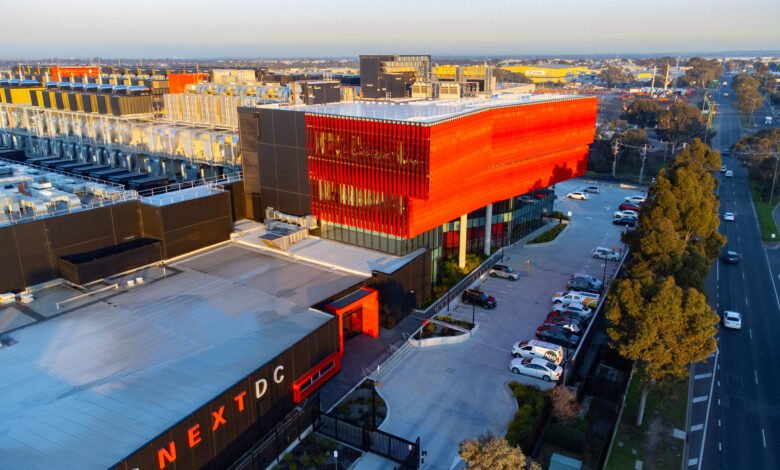
On 21 October 2026, NextDC (ASX: NXT) suffered one of the worst single-day falls on the Australian share market this year. Its shares dropped about 44% after the data centre company told investors that power delays at its new M3 Melbourne facility would force a major cut to its revenue and earnings forecasts.
If you own the shares, are thinking about them, or just saw the headlines and wondered what happened, here it is in plain English — what NextDC is, what went wrong, what a trading halt means, and what to watch next.
Note: this article is general information only, not personal financial advice. If you’re deciding what to do with your investments, talk to a licensed financial adviser.
What is NextDC?
NextDC is an Australian company listed on the ASX under the code NXT. It builds and operates data centres — the large, secure buildings full of servers that power cloud computing, online services and AI workloads.
It’s been one of the market’s favourite ways to invest in the AI boom, because more AI means more demand for data centre space. Its biggest project right now is M3 Melbourne, a 225-megawatt hyperscale data centre that was supposed to start earning serious money in the financial year ending June 2027 (FY27).
What happened: the timeline
19 October 2026 — trading halt. NextDC asked the ASX to halt trading in its shares while it assessed the impact of a delay to the power supply at M3 Melbourne. A trading halt is a pause button: the shares can’t be bought or sold until the company releases its news, so everyone gets the information at the same time.
21 October 2026 — the announcement. NextDC released an ASX update titled “M3 Melbourne Power Delay and Revised FY27 Guidance”. The key points:
- FY27 net revenue guidance was cut to $475–$500 million, from $615–$640 million.
- FY27 underlying earnings (EBITDA) guidance was cut to $245–$265 million, from $385–$410 million.
- FY27 capital spending guidance was cut to $4.5–$5.0 billion, from $5.25–$5.75 billion.
- About $140 million of contracted M3 revenue will be pushed out of FY27.
The reason: electricity distributor Jemena suspended parts of the network works needed to connect M3 to the main grid, citing community and stakeholder opposition. NextDC now expects the next increase in grid power in FY28 — a year later than planned.
The market reaction. When trading resumed, the shares fell roughly 44% in a single session. One market report put the value wiped off the company at about $3.1 billion. The stock had already been under pressure — down around 40% since mid-August — so this was the latest blow in a rough few months.
Why is a power delay such a big deal?
It helps to understand how a data centre makes money. A data centre only starts earning once it’s connected to the power grid and customers’ servers go live. Until then, it’s just an expensive building.
Because M3’s power has been pushed into FY28, NextDC can’t deliver or bill for about $140 million of contracted capacity this financial year. On top of that:
- Customer contracts have teeth. The affected M3 contracts include service credits (compensation NextDC must pay) and, in some cases, termination rights if capacity can’t be delivered.
- Debt pressure. NextDC is spending billions on construction. It told the market the delay could affect its ability to draw on its undrawn senior debt facilities while staying within its lending covenants. It also reported $8.675 billion of liquidity at 30 September 2026 and said it remains within its covenants.
- Everything else is on hold. All new developments and land purchases are paused, some sites may be sold, and a Victorian planning decision on later M3 stages won’t come until after the state election on 28 November 2026.
What is a trading halt, in simple terms?
A trading halt is when the ASX temporarily stops trading in a company’s shares at the company’s request. It usually happens when the company has big news coming and needs time to prepare it properly.
The halt protects investors: without it, some people might trade on rumours while others are in the dark. Once the announcement is out, trading resumes and the share price moves to reflect the news — which is exactly what happened with NextDC on 21 October.
What the guidance cut means in simple terms
| Measure | Old FY27 guidance | New FY27 guidance |
|---|---|---|
| Net revenue | $615–$640m | $475–$500m |
| Underlying EBITDA (earnings) | $385–$410m | $245–$265m |
| Capital spending | $5.25–$5.75bn | $4.5–$5.0bn |
In short: the company expects to earn a lot less this financial year than it told investors just two months ago. The earnings forecast fell by more than a third. Markets hate surprises like that, which is why the share price fell so hard.
What happens next: 5 things to watch
- Confirmation of the power date. The next increase in grid supply to M3 is expected in FY28. Any slippage beyond that would be another blow.
- The 28 November Victorian election. The state government’s planning decision on M3’s later stages comes after the election, so the outcome matters for NextDC’s expansion plans.
- Whether customers stick around. The delayed capacity is still under contract for now, but contracts carry termination rights. Watch for any customer exits.
- Debt and funding. NextDC flagged its senior debt facilities. Any update on covenant headroom or new funding will be closely watched.
- Company announcements. NextDC discloses material news through ASX announcements — that’s the official source, ahead of any commentary.
FAQs
Is NextDC going broke?
Nothing in the 21 October announcement says that. The company reported $8.675 billion of liquidity at 30 September 2026 and said it remains within its financial covenants. The problem is delayed revenue and higher funding risk, not insolvency — but the situation is serious enough that management paused all new projects.
Was the crash caused by weak demand for data centres?
Not according to the company. The delay comes from a third party (Jemena’s network works), not from customers cancelling. The affected M3 capacity is still contracted. The broader risk investors are now weighing is whether power and planning bottlenecks — not demand — are the real limit on data centre growth.
Should I buy NextDC shares now that they’re cheaper?
That’s a personal financial decision, and this article can’t make it for you. A lower price doesn’t automatically mean a bargain — the earnings outlook is now much weaker, and there are still open questions about power, contracts and funding. If you’re considering it, read the company’s ASX announcements and consider speaking to a licensed adviser.
I already own the shares. What should I do?
Again, that’s personal advice territory. What you can do is stay informed: follow NextDC’s ASX announcements, understand that the M3 power issue is now the key driver of the share price, and review whether the investment still fits your goals and risk tolerance — ideally with professional advice.
Where can I check the official information?
NextDC publishes all material announcements through the ASX and in the investor centre on its website. For share price and trading data, use your broker or a reputable market data provider.