

Picking a mobile plan mostly comes down to one question: how much data do you actually need? Get it wrong in one direction and you run out mid-month. Get it wrong the other way and you pay every month for gigabytes you never touch.
Quick answer: most people need 10 to 20GB of mobile data a month. The Australian Competition and Consumer Commission (ACCC) found the average postpaid mobile user gets through about 18GB a month, while prepaid users average around 9.7GB. If you are mostly on Wi-Fi at home and work, you will sit well below that. If you stream video on the train every day, you will need more. The figures below will help you work out where you land — and the ACCC Internet Activity Report is the source for the national averages quoted in this guide.
How Much Data Does the Average Person Use?
The ACCC tracks what Australians actually download on their phones, and the numbers are smaller than most people expect:
- Postpaid mobile plans: about 18GB a month on average
- Prepaid mobile plans: about 9.7GB a month on average
- All mobile users combined: about 14.5GB a month on average
Here is the part that should make you check your own plan. In its Communications Market Report 2024–25, the ACCC found the average advertised data allowance across all providers was 69GB a month, and the median plan included 42GB. In other words, the typical plan offers three to four times more data than the typical person uses. If you are on a big plan and never come close to the limit, there is a good chance you are overpaying.
How Much Data Do Your Apps Actually Use?
Video is what eats your allowance. Everything else — maps, messaging, music, browsing — uses very little by comparison. These are approximate figures per hour, and they change with the quality setting you stream at:
| Activity | Data used per hour |
|---|---|
| Streaming video in HD (YouTube 1080p) | 2.5 to 4.1GB |
| Streaming video in standard definition | About 0.7GB |
| TikTok | About 840MB (360MB in data-saving mode) |
| Instagram scrolling | About 600MB |
| Video call (Zoom, one-on-one) | 540MB to 1.62GB |
| FaceTime | About 180MB |
| WhatsApp video call | About 300MB |
| Music streaming (Spotify, normal quality) | About 43MB |
| Online gaming | 50 to 150MB |
| Google Maps | 3 to 5MB |
| Web browsing and email | About 50 to 100MB |
One hour of HD video a day is roughly 75 to 120GB a month on its own — more than most plans include. The same hour in standard definition is closer to 20GB. That single quality setting is often the difference between a cheap plan and an expensive one.
How Much Data Do You Need?
Match yourself to the closest description:
Light user — under 5GB a month. You are on Wi-Fi most of the day, and your phone is mainly for calls, texts, maps and the odd bit of browsing. A small prepaid plan is plenty, and you should not be paying for more.
Everyday user — 10 to 20GB a month. You scroll social media, stream music on the commute and watch the occasional video away from Wi-Fi. This is where most people land, and it lines up with the national average of about 18GB on postpaid.
Heavy user — 20 to 50GB a month. You stream video most days away from Wi-Fi, take regular video calls, or use your phone as a hotspot for a laptop. A mid-size plan with data rollover suits you best.
Very heavy user — 50GB or more a month. Your phone is your main internet connection, you stream in HD constantly, or you work remotely without home broadband. Only this group should be looking at the biggest plans or an unlimited option.
How to Check Your Own Data Usage
Guessing is the problem. Checking takes two minutes, and it is the only reliable way to pick a plan size:
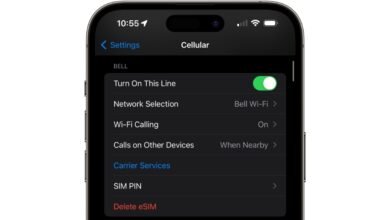
- iPhone: go to Settings, then Mobile (or Cellular). Scroll down to see how much data each app has used. You can reset the statistics at the start of a month to get a clean reading.
- Android: go to Settings, then Network & internet, then Data usage (or SIMs). It shows your total use and a breakdown by app.
- Your provider’s app: most telcos show your last few months of usage. Look at three months and take the average, so one heavy month does not skew the picture.
Once you know your real number, pick a plan a little above it — enough headroom for a busy month, but not double or triple what you use. If the check shows you are overpaying, switching providers is easier than most people think, and you can keep your number. If your phone supports it, an eSIM makes switching even quicker, because there is no physical SIM to wait for in the post.
Are You Paying for Data You Never Use?
Probably, if you are with one of the big three telcos. The ACCC found the smallest postpaid plans from Telstra, Optus and Vodafone included between 50GB and 60GB a month — up to three times what the average postpaid customer actually uses. Prepaid customers are in a similar spot: the average prepaid user gets through around 9GB a month, while the smallest standard recharges from the big three generally include 20GB to 30GB.
Before you renew or upgrade, compare your average use with what your plan includes. If you use 10GB on a 60GB plan, you are paying for 50GB you never touch. A smaller plan, or a cheaper provider running on the same network, often gives you the same coverage for less. And if you do have the odd heavy month, a plan with data rollover lets you bank unused gigabytes instead of losing them — a feature about a third of Australians say they value, according to a Finder survey.
6 Simple Ways to Use Less Mobile Data
- Use Wi-Fi whenever you can. At home, at work, at the cafe — anything that runs over Wi-Fi does not count against your mobile allowance.
- Download before you leave. Save shows, playlists, podcasts and maps over Wi-Fi at home, then watch or listen offline.
- Drop the video quality. Standard definition looks fine on a phone screen and uses roughly a third of the data of HD.
- Turn on data saver. Spotify, TikTok and YouTube all have a data-saving or low-quality mode in their settings.
- Stop apps running in the background. Turn off background refresh and video autoplay for the apps you do not need updating constantly.
- Pick a plan with rollover. Unused data carries over instead of vanishing at the end of the month, which covers the occasional heavy month without paying for a bigger plan.
Frequently Asked Questions
What happens if I run out of mobile data?
It depends on your plan. Some slow your speed until the next billing period, some charge for extra data automatically, and some simply stop mobile data until you buy a top-up. Check the critical information summary for your plan before it happens, not after.
Do unused gigabytes roll over to next month?
Only on some plans. Many prepaid plans and a growing number of postpaid plans let you bank unused data, usually for one or two months. If your plan does not offer rollover, your unused data disappears at the end of each billing period.
Does streaming use data on Wi-Fi?
No. Anything you stream while connected to Wi-Fi uses your home internet, not your mobile data allowance. That is why downloading shows at home is the easiest way to save mobile data.
Is an unlimited data plan worth it?
For most people, no. Unlimited plans cost more, and the average person uses under 20GB a month. They only make sense if you regularly use 50GB or more, or you have no home broadband and your phone is your main connection.
Does 5G use more data than 4G?
No. 5G is faster, not hungrier — a gigabyte is a gigabyte either way. But because things load faster on 5G, it is easier to watch more HD video without noticing, which can push your usage up.