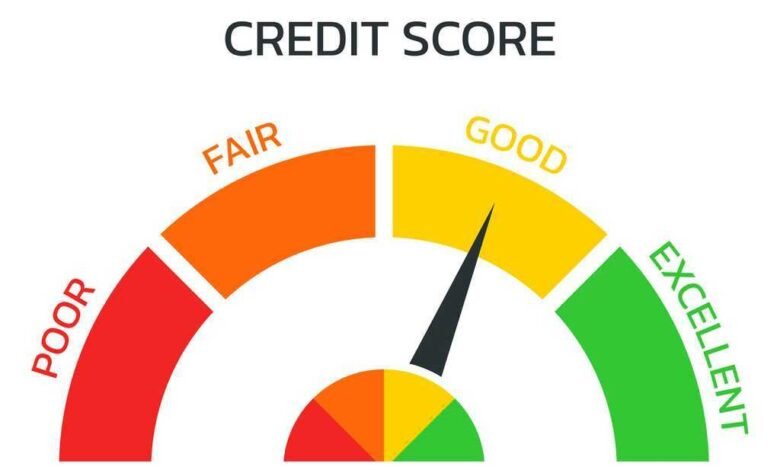
A good Illion credit score is 500 to 699 on Illion’s 0 to 1,000 scale. If your score sits in that range, lenders see you as a fairly safe borrower, and you will likely be approved for most credit cards, personal loans and phone plans at standard rates. A score of 700 or higher is even better, while 800 to 1,000 puts you in the top “excellent” band. You can check your score for free through services that use Illion data, such as ClearScore — Illion’s consumer credit business is now part of Experian, so your Illion report is issued through Experian today.
Illion Credit Score Bands Explained
Illion scores run from 0 to 1,000. Here is what each band means:
| Band | Score range | What it means |
|---|---|---|
| Excellent | 800 – 1,000 | Long, clean credit history with on-time payments. Best rates and widest choice of lenders. |
| Very good | 700 – 799 | Strong repayment record with maybe a few enquiries. Most lenders will say yes at competitive rates. |
| Good | 500 – 699 | No serious negative marks on your file. Likely to be approved for most credit applications. |
| Fair | 300 – 499 | Short credit history or some past problems. Fewer lenders, higher rates, and you may need a deposit or guarantor. |
| Low | 0 – 299 | Defaults, missed payments or many recent applications. Most mainstream lenders will decline; specialist lenders may help. |
So if you were wondering whether 650 is a good Illion score — yes, it is. It sits in the middle of the good band. A score of 550 is also good, though near the lower end. Anything from 500 up counts as good on the Illion scale.
Illion vs Equifax vs Experian: How the Scores Compare
Australia has three credit reporting bodies, and each one scores you differently. Illion and Experian both use a 0 to 1,000 scale, while Equifax uses 0 to 1,200. That is why the same person can have three different numbers on the same day.
| Band | Illion (0 – 1,000) | Experian (0 – 1,000) | Equifax (0 – 1,200) |
|---|---|---|---|
| Excellent | 800 – 1,000 | 800 – 1,000 | 853 – 1,200 |
| Very good | 700 – 799 | 700 – 799 | 735 – 852 |
| Good | 500 – 699 | 625 – 699 | 661 – 734 |
| Average / fair | 300 – 499 | 550 – 624 | 460 – 660 |
| Below average / low | 0 – 299 | 0 – 549 | 0 – 459 |
Notice that “good” starts much lower on Illion (500) than on Equifax (661) or Experian (625). A score of 600 would be good with Illion but only average with Equifax. That is normal — it does not mean your credit history changed. It just means the bureaus use different scales and formulas. If you want the full picture, read our guide on what a credit score is and how the three bureaus work.
Is Illion Still Used After the Experian Takeover?
Yes — but under a new name. Illion, formerly known as Dun & Bradstreet, was one of Australia’s three major credit reporting bodies for decades, and it was widely used by telcos, utility companies and some lenders. Experian acquired Illion in late 2024, and Illion’s consumer credit data has since been consolidated into Experian. The old illion.com.au website now redirects to experian.com.au.
What does that mean for you? The Illion score bands above (500–699 is good, 800–1,000 is excellent) are still the bands shown on your report when you check through a service that displays Illion data, such as ClearScore. Your credit history did not disappear — it moved into Experian’s system. If a lender checks your Illion score, they are now effectively looking at the same data through Experian.
What Is a Good Illion Score for a Home Loan?
For a home loan, most mainstream lenders want to see at least a good score — 500 or higher on the Illion scale — though many banks put more weight on your Equifax score. As a rough guide:
- 500 – 699 (good): you can usually get a home loan at standard rates, as long as your income, deposit and debts stack up.
- 700 – 799 (very good): you are in a strong position and may qualify for sharper rates.
- 800 – 1,000 (excellent): the best rates and the widest choice of lenders.
- Below 500: mainstream banks may decline you, and you may need a specialist lender, a bigger deposit, or time to rebuild your score first.
Your score is only one part of a home loan decision. Lenders also look at your income, expenses, deposit size and existing debts. A good score helps, but it does not guarantee approval on its own. For context, the average credit score in the country sits in the excellent range on the Equifax scale, so a score in the good band is below average — worth improving if you are planning a big application.
How to Check Your Illion Credit Score for Free
You can get a free copy of your credit report from each credit reporting body once every three months. To see your Illion score:
- Use ClearScore. ClearScore shows your Experian/Illion score on the 0 to 1,000 scale, free, and updates monthly.
- Request your report directly. You can ask Experian (which now holds Illion’s consumer data) for your free credit report through its website.
- Check for errors. Look for accounts you do not recognise, wrong addresses, or defaults you already paid. Errors can drag your score down for no reason.
Checking your own score never hurts it. Only a lender’s hard enquiry — when you apply for credit — can lower your score. Our step-by-step guide explains how to check your credit score for free.
How to Improve Your Illion Credit Score
If your score is under 500, or you want to push a good score into the very good range, these steps work:
1. Pay every bill on time
Repayment history carries the most weight. Set up direct debits for loans, cards, phone and utility bills so nothing slips past its due date.
2. Fix mistakes on your file
If you find an error on your report, dispute it with the credit reporting body. A wrongly listed default can cost you dozens of points, and getting it removed is free.
3. Cut back on new applications
Every credit application leaves an enquiry on your file. Several in a short time makes lenders nervous. Only apply when you actually need the credit, and avoid applying for several cards or loans at once.
4. Pay down existing debts
High balances on cards and loans count against you. Paying them down — even in small steps — lifts your score over time.
5. Be careful with buy now, pay later
Since mid-2025, buy now, pay later activity appears on credit files. Missed payments and too many small accounts can pull your score down. See how buy now, pay later affects your credit score.
Score changes take time — usually a few months of steady on-time payments before you see a real lift. There is no shortcut, and any company that promises to “fix” your score overnight for a fee is not worth your money. For more detail, read our guide on how to build your credit score.
Frequently Asked Questions
Is 700 a good Illion credit score?
Yes — 700 is a very good Illion score. It sits at the start of the 700–799 “very good” band, above the 500–699 good range. Most lenders will offer you competitive rates at this level.
Is 500 a good Illion credit score?
Yes, just barely. 500 is the bottom of the good band (500–699). You are likely to be approved for most credit, but a slightly higher score would get you better rates and more choice.
What is the highest Illion credit score?
The highest possible Illion score is 1,000. Scores from 800 to 1,000 are rated excellent.
Why is my Illion score different from my Equifax score?
Each bureau uses its own scale and formula, and not every lender reports to every bureau. Illion tops out at 1,000 while Equifax tops out at 1,200, and they may hold slightly different information about you. A different number across bureaus is normal.
How often is my Illion score updated?
Your score updates as new information lands on your file — usually at least once a month, whenever a lender reports a payment, a new account, or an enquiry.
This article is general information only and is not personal financial advice. If you need advice about your own situation, speak with a licensed financial adviser or a free financial counsellor.