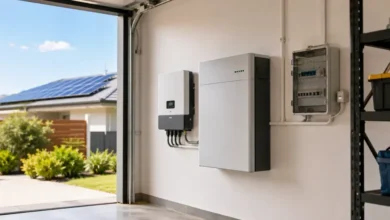
Setting up the NBN for the first time sounds harder than it is. In most cases it comes down to six steps: check your address, pick a plan, sign up, get the equipment installed, plug in your modem, and connect your devices. If your home already has NBN gear on the wall, you can often be online the same day you sign up. This guide walks through the whole process, including what to do if you are renting or moving into a brand-new home.
One thing to know upfront: NBN Co owns and runs the network, but it does not sell internet plans. You buy your plan from a provider — Telstra, Optus, TPG, Aussie Broadband, SpinTel and dozens of others — and that provider arranges everything with NBN Co. You can check what is available at your address on the NBN Co website.
What you need before you start
You do not need much. Have these ready and the rest goes quickly:
- Your address. You will need it to check availability and your connection type.
- A modem or router. Some providers include one free or for a small fee; you can also use your own if it is compatible (more on that below).
- An email address and a payment method for the sign-up.
- Access to the property on installation day, if a technician needs to come.
Step 1: Check your address and find your connection type
Go to nbnco.com.au and use the “Check your address” tool. It will tell you whether the NBN is available at your home and which connection type you have. The type matters, because it decides what equipment you need and whether a technician has to visit.
There are seven connection types, but most homes have one of these five:
- Fibre to the Premises (FTTP): fibre runs all the way into your home. Fastest and most reliable.
- Fibre to the Node (FTTN): fibre runs to a box in your street, then copper phone lines carry it the rest of the way.
- Fibre to the Curb (FTTC): fibre runs to a pit near your kerb, then a short copper run into your home.
- Fibre to the Building (FTTB): common in apartment blocks — fibre to the building, then the building’s own wiring.
- Hybrid Fibre Coaxial (HFC): uses the old pay-TV cable network for the last stretch.
Rural homes may have Fixed Wireless or Satellite instead. If your address shows as not NBN-ready yet, ask your provider about mobile broadband as a stopgap.
Step 2: Pick a speed and a provider
NBN plans come in speed tiers: NBN 25, NBN 50, NBN 100, NBN 250, NBN 1000 and NBN 2000. The right one depends on your household:
- NBN 25 or NBN 50 is usually enough for one or two people who browse, email and stream in HD.
- NBN 100 suits families, 4K streaming, working from home and a house full of devices.
- NBN 250 and above is for heavy users, gamers and large households where several people stream at once.
Most plans now include unlimited data, so check that before you compare prices. Also check the typical evening speed — the ACCC’s speed labels run from Basic (under 15 Mbps) to Premium (60 Mbps or more) in the busy 7–11pm period, and the ACCC’s final Measuring Broadband Australia report (June 2026) found fixed-line NBN averaged 99.4% of plan speed in busy hours. If you are not sure which tier fits your household, our guide to what speed NBN you need breaks it down by household size and use.
Compare a few providers on price, contract length and whether a modem is included. Switching providers later is easy, so do not stress about picking the perfect one first go.
Step 3: Sign up and book your installation
Once you have chosen a plan, sign up with the provider. You will usually need to give your address, pick a connection date and enter your payment details.
Your provider then tells you what happens next:
- If NBN equipment is already installed at your home (common in established houses and apartments), you may only need a connection date — the day your service is switched on. No technician visit is needed.
- If it is the first NBN connection at the property, your provider books a technician appointment with NBN Co. The technician installs the outside utility box and the inside connection box.
If you are moving house, give your provider as much notice as you can — a couple of weeks is ideal — and line up the connection date with your move-in day so you are not without internet.
Step 4: Get the NBN equipment installed
What gets installed depends on your connection type:
- FTTP: a utility box on an outside wall and a connection box inside your home.
- FTTC: a connection box inside your home.
- HFC: an NBN device on the outside of the property.
- FTTN and FTTB: usually no new hardware — your connection is often activated remotely over the existing phone lines.
- Fixed Wireless or Satellite: an antenna and a utility box outside, plus a connection box inside.
A regular installation takes up to 2 hours. A complex one — for example, where new cables have to be run — can take 4 to 8 hours. Make sure someone is home, clear the area where the equipment will go, and make sure there is a power point nearby, because the NBN connection box needs power to work.
After the technician leaves, activation can take a few hours to a few days. Your provider will tell you when your service is ready.
Step 5: Set up your modem
Once your service is active, setting up the modem takes about ten minutes:
- Check your modem is compatible. For FTTN and FTTB you need a modem that supports VDSL2. For FTTP, HFC and FTTC you need a modem with an Ethernet or WAN port. If you bought the modem from your provider, it will usually arrive pre-configured — just plug it in.
- Plug the modem into the NBN box. For FTTP, FTTC and HFC, run an Ethernet cable from the NBN connection box (the UNI-D port) to the WAN port on your modem. For FTTN and FTTB, connect the modem to your phone wall socket with the cable provided.
- Power everything on. Plug the modem into power, switch it on and wait for the lights to settle — usually a couple of minutes. The internet light should turn solid green.
- Set up your Wi-Fi name and password. If your modem came from your provider, the Wi-Fi name and password are usually printed on a sticker on the modem or in the setup guide. Change the password to something of your own.
Place the modem somewhere central in your home, out in the open and away from thick walls and other electronics, for the best Wi-Fi coverage. If your internet is slow after setup, our guide on how to fix slow NBN walks through the common causes.
Step 6: Connect your devices and test the speed
Connect your phone, laptop, TV and other devices to the Wi-Fi network you just set up, using the password you chose. Then run a speed test — the ACCC recommends testing in the evening, between 7pm and 11pm, when the network is busiest, so you see the real speed you are getting.
If the result is well below your plan’s speed, first check that you are testing over Wi-Fi close to the modem, then restart the modem. If it is still slow, contact your provider.
What if something goes wrong?
Most setup problems have a simple fix:
- No internet light on the modem: check every cable is pushed in firmly, then restart the modem — switch it off, wait 30 seconds, switch it back on and wait a few minutes.
- Wi-Fi works but the internet does not: the service may not be activated yet. Check the activation date your provider gave you.
- Slow speeds: move closer to the modem, try a wired Ethernet connection to rule out Wi-Fi issues, and test again in the evening.
- Widespread outage: check the NBN Co outages page to see if there is a known fault in your area before you spend an hour troubleshooting.
If none of that helps, call your provider. It can run a line test from its end and, if needed, book an NBN technician.
Setting up NBN in a rental or a brand-new home
If you rent: you only need to talk to your landlord if the NBN has never been set up at the property before. A first-time installation can mean drilling holes and mounting boxes on the walls, so get written consent from the owner or property manager first. If the previous tenant already had NBN, you can usually just sign up — no landlord permission needed.
If your home is newly built: a $300 NBN New Development Charge may apply to the first internet or phone activation at the property. It is a one-off fee, and whether the tenant or the owner pays it is something to agree on with your landlord or property manager before you sign up. Start the process early — for a new build, allow two to three months before moving in, in case installation work is needed.
If you move house: leave the NBN equipment behind. The connection box and utility box belong to the property, not to you, and they are registered to that address. At your new home, run through the same steps — check the address, sign up and, if the new place already has NBN gear, you may only need a connection date.
Frequently asked questions
How long does it take to set up NBN?
If the equipment is already in place, you can often be connected on the day your provider switches the service on. If a technician visit is needed, allow a few days for the appointment plus a couple of hours for the installation itself. Activation after installation can take a few hours to a few days.
Can I set up NBN myself?
Yes, if the NBN equipment is already installed at your home. You just plug in a compatible modem and connect. If it is the first connection at the property, a technician has to install the NBN boxes first — you cannot do that part yourself.
What modem do I need for NBN?
It depends on your connection type. FTTN and FTTB need a VDSL2 modem. FTTP, HFC and FTTC need a modem with an Ethernet (WAN) port. Most providers sell or include a compatible modem, which is the simplest option if you are unsure.
Do I need a technician to install NBN?
Only if the property has never been connected before, or the existing equipment is faulty. Homes that already have a working NBN connection box can usually be activated remotely, with no visit.
How much does it cost to set up NBN?
The standard installation is free in most cases — the cost is in the monthly plan. The exception is the $300 New Development Charge for the first activation at a newly built property. Some providers also charge for a modem or for a technician visit if you miss your appointment, so check the fine print.
The bottom line
Setting up NBN is a six-step job: check your address, choose a speed and provider, sign up, get the equipment installed if needed, plug in your modem and connect your devices. Most of the work is done for you — your provider books the technician and NBN Co handles the network side. The main things you control are picking the right speed tier and making sure your modem is compatible with your connection type. Get those two right and the rest is just plugging in cables.