

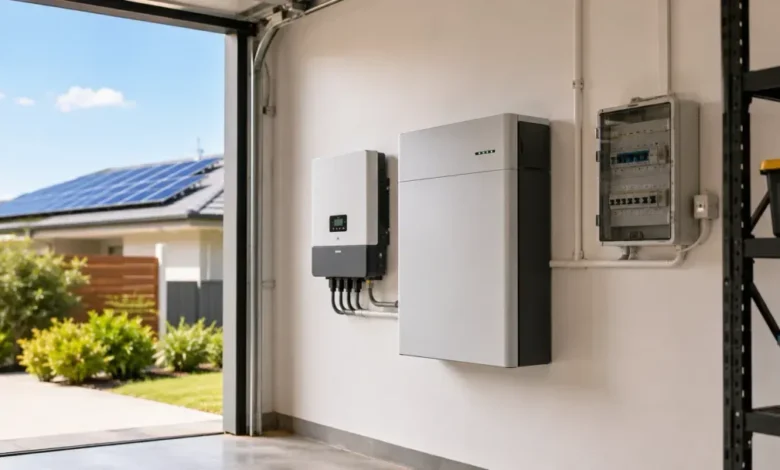
If you are thinking about solar for your home, you will run into this question fast: should you get solar panels, or should you get a solar battery? The honest answer is that the two are not really rivals. A battery cannot make power on its own — it can only store what your panels produce. So the real choice is between solar panels on their own, and solar panels with a battery added.
Both setups can cut your power bill. The difference is when you get to use your own electricity, how much it costs you upfront, and how long it takes to pay for itself. Here is how they compare, with 2026 prices for Australian homes.
The quick verdict
Solar panels alone are the better buy for most homes. They cost far less, pay for themselves in about 3 to 6 years, and suit anyone who is home during the day or can shift washing, dishwashing and pool pumps into daylight hours.
Adding a battery is worth it if you use most of your power in the evening, export a lot of solar during the day, or want backup power in a blackout. It costs several thousand dollars more and takes longer to pay back, but it lets you use your own solar power after dark instead of selling it to the grid for a few cents and buying it back at a much higher price.
Solar panels vs solar battery at a glance
| Solar panels only | Solar panels + battery | |
|---|---|---|
| What it does | Makes electricity from sunlight during the day | Makes electricity during the day and stores the extra for later |
| Typical cost (6.6kW system) | $5,000 to $8,500 installed, after the STC discount | $12,000 to $19,000 installed, after federal rebates |
| Daytime power | Yes, straight from the panels | Yes, straight from the panels |
| Evening and night power | From the grid, at full retail price | From the battery, until it runs out |
| What happens to spare solar | Exported to the grid for a feed-in tariff, usually 3 to 10 cents per kWh | Stored in the battery first, then exported once the battery is full |
| Power in a blackout | No — the system shuts down for safety | Yes, if the battery has backup capability and is charged |
| Typical payback | About 3 to 6 years | About 6 to 9 years for the combined system |
| How long it lasts | Panels carry 25 to 30-year performance warranties | Batteries typically last 10 to 15 years, with a 10-year warranty |
Prices are typical installed prices for Australian homes in 2026, checked in November 2026. Your quote will vary with your roof, your location and the brands you choose.
How solar panels alone work
Your panels make electricity whenever the sun is shining. Your home uses what it needs right away, and anything left over goes back to the grid. Your retailer pays you a feed-in tariff for that exported power — usually somewhere between 3 and 10 cents per kilowatt-hour.
The catch is timing. Most homes use only about 25 to 35 percent of what their panels make during the day, because the family is out, or the big appliances run at night. The rest is exported for a few cents, then bought back in the evening at 30 to 70 cents per kilowatt-hour. That gap is the whole reason batteries exist.
Solar-only systems suit you if you work from home, run the washing machine and dishwasher during the day, have a pool pump on a daytime timer, or simply want the lowest upfront cost with the fastest payback. A typical 6.6kW system — the most common size in Australian homes — makes about 24 to 28 kWh on an average day, which covers most daytime use for a three or four-bedroom home.
One thing worth knowing: a solar-only system cannot power your home in a blackout. Grid-connected systems shut down automatically when the grid goes down, so lines workers stay safe. If you want backup power, you need a battery with backup capability.
What a battery adds
A battery does not make any electricity. It stores the spare solar power your panels make during the day so you can use it in the evening, overnight, or during a blackout. Instead of exporting your surplus for a few cents, you use it yourself and avoid buying grid power at peak prices.
For a household exporting 8 to 10 kWh a day, that stored power can be worth an extra $1,000 to $1,800 a year on top of what the panels alone save. The catch is the cost. Adding a 10 kWh battery to a 6.6kW system adds roughly $8,280 to $11,280 after federal rebates, and the battery will probably need replacing after 10 to 15 years — long before the panels wear out. Most batteries carry a 10-year warranty promising they will still hold at least 70 percent of their usable capacity at the 10-year mark.
A battery is the better choice if most of your power use happens after dark, you export a lot of solar during the day, you live somewhere with frequent blackouts, or you want to charge an electric vehicle overnight from your own solar. It is a harder sell if you are home all day and already use most of your solar as it is made, or if you plan to move house within a few years.
What does it cost in 2026?
| Setup | Typical installed price after rebates |
|---|---|
| 6.6kW solar panels only | $5,000 to $8,500 |
| 6.6kW solar + 10 kWh battery | $12,000 to $19,000 |
| Adding a 10 kWh battery to existing solar | $8,280 to $11,280 |
Two federal discounts bring those prices down. Solar panels earn Small-scale Technology Certificates (STCs), which your installer claims and passes on as an upfront discount. The STC discount shrinks a little every January and the scheme ends in 2030, so the same system costs slightly more each year you wait.
Batteries get a separate discount through the federal Cheaper Home Batteries Program, which started on 1 July 2025 and takes roughly 30 percent off an eligible battery. Since 1 May 2026 it pays in tiers: the full rate, about $250 per usable kilowatt-hour, on the first 14 kWh, then less for larger batteries. A 10 kWh battery attracts about $2,500 off. The program runs until 31 December 2030, with the rate stepping down over time. If you already have panels and are thinking about a battery, read our guide to the home battery rebate changes before you get quotes.
Which is better for you?
Get solar panels only if you want the lowest cost and fastest payback, you use most of your power during the day, or your budget is tight. You can always add a battery later — just make sure your inverter is battery-ready, or budget for a hybrid inverter when the time comes. Our guide to the best solar inverters explains which models work with batteries.
Get solar panels plus a battery if your evenings are when the power bills pile up, you export a lot of solar for almost nothing, you want the lights and fridge to keep running in a blackout, or you plan to charge an EV at home overnight. The federal battery rebate makes this a better deal than it was a few years ago, but it is still a longer payback than panels alone.
Wait on the battery if you are about to move, your roof faces the wrong way for good solar output, or your daytime use already soaks up most of what your panels make. A battery with nothing to store is just an expensive box on the wall.
One more thing to check before you decide: your feed-in tariff and your evening electricity rate. The bigger the gap between what you are paid for exports and what you pay for evening power, the more a battery is worth. You can compare your current plan on the government comparison site Energy Made Easy.
Frequently asked questions
Do solar panels work without a battery?
Yes. Most solar systems in Australian homes have no battery at all. Your panels power your home during the day and any spare electricity is exported to the grid for a feed-in tariff. A battery is an optional add-on, not a requirement. If you are wondering what happens once the sun goes down, read our answer to do solar panels work at night.
Can I add a battery to my existing solar system later?
Usually yes. Most systems installed in the last few years can take a battery, though you may need a new hybrid inverter or an extra battery inverter if yours is not battery-ready. Retrofitting a battery generally costs a little more than buying it with the panels in the first place, because the installer makes a second visit.
Is a solar battery worth it in 2026?
It depends on how much solar you export and what you pay for evening power. If you export 8 to 10 kWh a day and buy evening power at 30 cents or more per kWh, a battery can add $1,000 to $1,800 a year in savings. If you already use most of your solar during the day, the payback stretches out and panels alone are the better value.
Does a solar battery work in a blackout?
Only if it is set up for backup. A battery with backup capability keeps essential circuits — lights, fridge, internet — running during an outage. A standard battery without backup shuts down with the rest of the system. Check the backup feature before you buy, and ask your installer which circuits it will cover.
Can a battery charge from the grid?
Yes, most modern batteries can charge from the grid as well as from solar. Some households charge the battery overnight on a cheap off-peak rate and use it during the expensive evening peak. Whether that pays depends on your tariff — the gap between off-peak and peak rates has to be wide enough to cover the energy lost in charging and discharging.
Prices, rebates and tariffs change often and vary by state and retailer. This article is general information only — get quotes from CEC-accredited installers and check current rebates before you buy.


